Independent auto repair shops often ask one deceptively simple question: “Can you make the phone ring?” Marketing gets treated like a magic lever, something you pull to increase car count on demand.
Reality runs on different physics.
Marketing is only as strong as the operational truth behind it.
It can expose your business, but it cannot change what customers find once they land on your website or pull into your parking lot.
To understand why, you have to understand brand gravity: the unseen force that pulls customers toward your shop and keeps them there.
Brand Gravity: Exposure Meets Credibility.png?width=450&height=300&name=brand%20gravity%20depiction%20(Medium).png)
Brand gravity forms when marketing and operations support each other. The relationship is simple:
Marketing = exposure
Operations = credibility
Brand gravity = the momentum formed when the two align
Marketing creates the spark with ad impressions, ad clicks, website visits, and video views.
Operations supply the oxygen, the real-world experience that validates what marketing promised.
A spark without oxygen doesn’t become fire.
It fizzles out.
Customers interact digitally, then metaphorically open the hood on your business—and bounce when what they see doesn’t line up with the promise.
This is why a shop can have a beautifully built campaign producing thousands of clicks…but still feel like “marketing isn’t working.” The interactions are there. The gravity is not.
When Marketing Overpromises and Operations Underdeliver.png?width=450&height=394&name=man%20lookin%20under%20the%20hood%20of%20a%20vehicle%20(Medium).png)
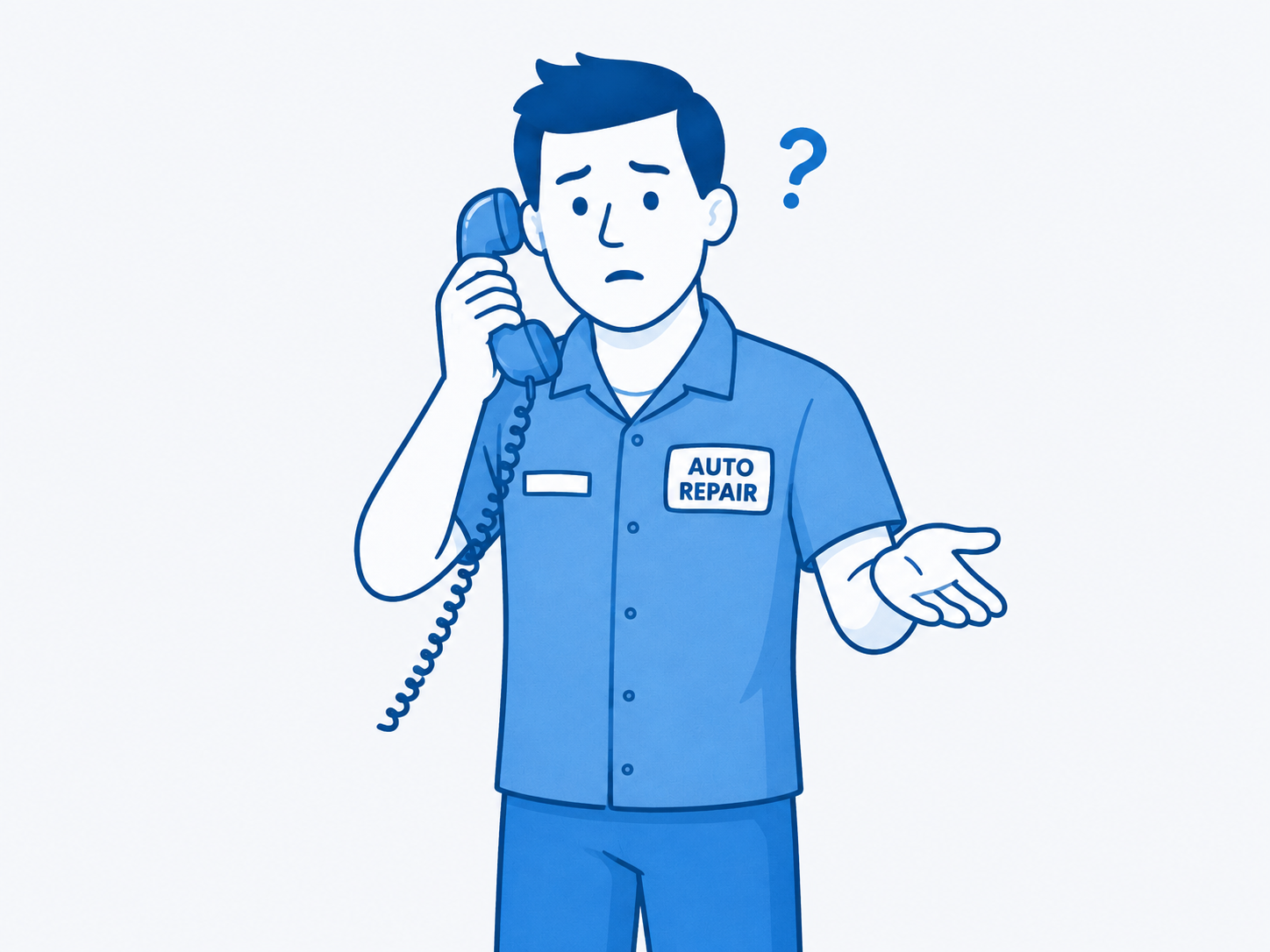
Think of a customer who sees your ad. They click. They arrive on your website and start comparing what they see online to what they imagine they’ll find in person.
They’re gone within seconds when:
-
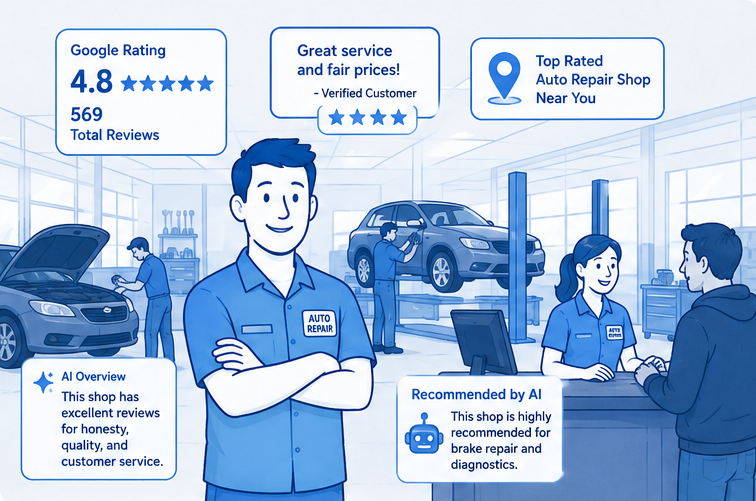
The Google reviews don’t match the confidence of the ads.
-
The photos show a shop that looks nothing like a place they’d trust.
-
The website presents a polished, modern brand, but the actual physical location looks tired, cluttered, or neglected.
It’s like a real estate listing that has been AI’d to the point of shock.
The photos look bright, airy, luxurious, then you show up and wonder if you’re at the right address.
That disconnect between digital promise and physical reality kills trust instantly.
Sometimes marketing even makes the phone ring, but the team isn’t ready. Calls are rushed, inconsistent, or handled by someone who isn’t trained to talk with customers. The trust that the ad helped create burns off in seconds.
Marketing didn’t fail here.
It simply revealed the business faster.
The Dynamic Lifecycle of Brand Gravity.png?width=450&height=450&name=brand%20gravity%20representation%20(Medium).png)
Shops don’t grow in a straight line. They evolve, regress, surge forward, or fall backward depending on internal and external forces. Brand gravity isn’t something you “achieve” once. It’s something you maintain.
Here’s how the lifecycle tends to look.
Stage 1: Low Gravity = “Invisible or Uncertain”
Some shops have good technicians, good leadership, and solid service, but almost no visibility. They’re hidden in the digital world. They’re known only by a tiny slice of the community.
Marketing here can generate clicks and visits, but without a strong digital footprint, curb appeal, or reputation, customers hesitate. Discounting may be required at first to overcome the uncertainty.
Archetype: The Skilled but Silent Shop
Runs a tight ship internally, but nobody knows it yet.
Stage 2: Borrowed Gravity = Fueling the Engine with Nitrous
Discounts work. They pull people in when the brand isn’t strong enough yet to stand on its own.
But discounts are like nitrous, powerful bursts that burn out quickly and can’t sustain real momentum. Shops rely on them when curb appeal, reputation, or brand experience isn’t strong enough to carry the weight of full-price confidence.
Customers show up.
They try you once.
Most never return.
Why?
Because the operational truth didn’t match the promise.
Archetype: The Shop Running on Temporary Boosts
Traffic is high when offers run, and drops the moment they stop.
Stage 3: True Gravity = “Value and Service as the Pull”.png?width=450&height=450&name=customer%20and%20service%20advisor%20with%20brand%20gravity%20icon%20(Medium).png)
At this stage, the shop’s operational truth matches the story told through marketing.
-
Reviews are strong and consistent.
-
The photos of the shop build trust, not hesitation.
-
Website experience feels aligned with what the customer actually encounters in person.
-
Customer service is predictable and professional.
-
Referrals and repeat customers start compounding.
Discounts become optional instead of essential.
Marketing efficiency improves.
Every click becomes more valuable.
Archetype: The Quiet Giant Turned Magnet
Once invisible, now impossible to ignore.
Stage 4: Eroding Gravity = “When a Mature Shop Slides Backward”
Even great shops can lose momentum.
A mature business can move backwards in the lifecycle when internal conditions shift.
Common triggers:
-
Losing a key technician or advisor
-
Staffing instability
-
Management drift or culture changes
-
Declining consistency in service
-
Poor communication or rushed customer interactions
Suddenly, reviews slip.
Calls feel off.
Repeat customers hesitate.
Marketing performance drops, even with the same strategy and budget.
Archetype: The Complacent Veteran
Strong history, but today’s interactions don’t match yesterday’s reputation.
External Conditions Marketing Cannot Overcome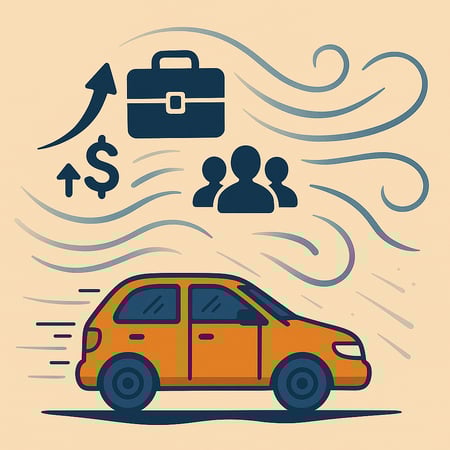
Marketing cannot overcome macro reality.
-
Local economic downturn
-
Increased competition
-
Neighborhood changes
-
Cost-of-living shifts
-
Consumer buying habits during slow seasons
-
Industry-wide staffing shortages
Marketing amplifies what already exists; it doesn’t rewrite conditions outside the walls of the shop.
It’s a spotlight, not a paintbrush.
It reveals reality; it doesn’t repaint it.
Interactions as Compounding Forces
Every digital interaction is a test of your brand’s promise.
They either increase brand gravity or decrease it:
-
Exposure brings people in.
-
Credibility keeps them.
-
Consistency compounds momentum.
When marketing and operations are aligned, each customer’s experience tightens the flywheel. Marketing becomes easier, cheaper, and more effective.
When they’re misaligned, the opposite happens.
The flywheel slows.
Gravity weakens.
Marketing is often blamed for revealing what operations need to improve.
Pivot Points: How Shops Change Their Trajectory.png?width=450&height=675&name=man%20looking%20through%20an%20open%20door%20in%20reflection%20(Medium).png)
This doesn’t need to be tactical. It’s conceptual, a mental model.
Shops pivot when they become honest about their stage in the lifecycle.
-
If the shop lacks gravity, they invest in operational truth first.
-
If the shop relies on discounts, they build internal consistency and curb appeal so the brand can stand without constant offers.
-
If the shop is eroding, leadership resets culture and quality before spending more on ads.
-
If the shop is strong, they scale their gravity with marketing that accurately reflects who they already are.
Brand gravity is dynamic. It can be rebuilt.
But it always begins with aligning digital promise and operational truth.
Conclusion: Respect the Physics of Brand Gravity
Marketing cannot carry a shop that refuses to live up to its own story—but it can transform a strong one.
Digital interactions like ad impressions, website visits, video views, and ad clicks are the spark.
Operational truth is the oxygen.
When the two align, brand gravity forms. It pulls customers in, keeps them returning, and turns your shop into the trusted choice in your community.
Before asking for more leads, ask: What truth will those leads discover when they interact with us?
That question doesn’t just clarify the path forward, it illuminates it.
About the Author