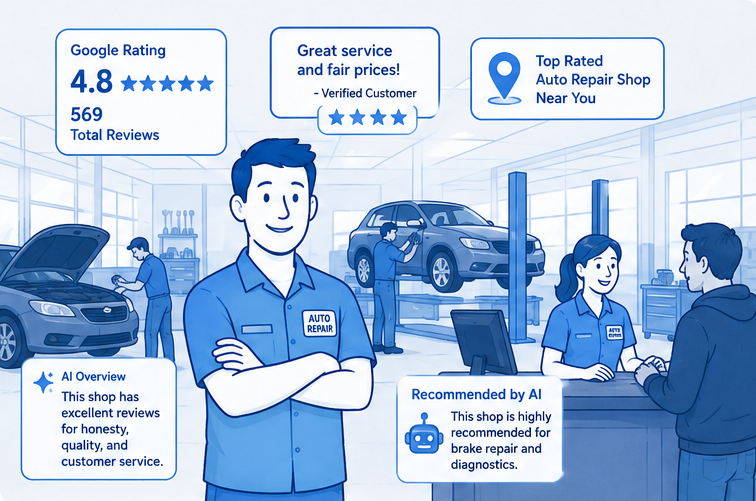
With the widespread integration of Artificial Intelligence models into search engines like Google, as well as AI Chatbots becoming a primary way some consumers search for information online, making sure your auto repair business shows up in these contexts has been a top priority.
But it's been difficult to tell exactly what factors are contributing to your presence in this new era of search, and created many questions like:
Is my current SEO enough? How are AEO & GEO different? And does SEO even matter anymore?
At AutoBoost, we've been developing and refining our SEO best practices for auto repair shops for almost 30 years. Understanding and navigating the development of AI search tools has been difficult, as so many sources offer conflicting information on the topic.
But after months of confusion about what actually contributes to getting your business shown, Google has released insights into the factors through their Search Central documentation that guide discovery for generative AI features in search, and the impact that SEO has in today's search landscape.
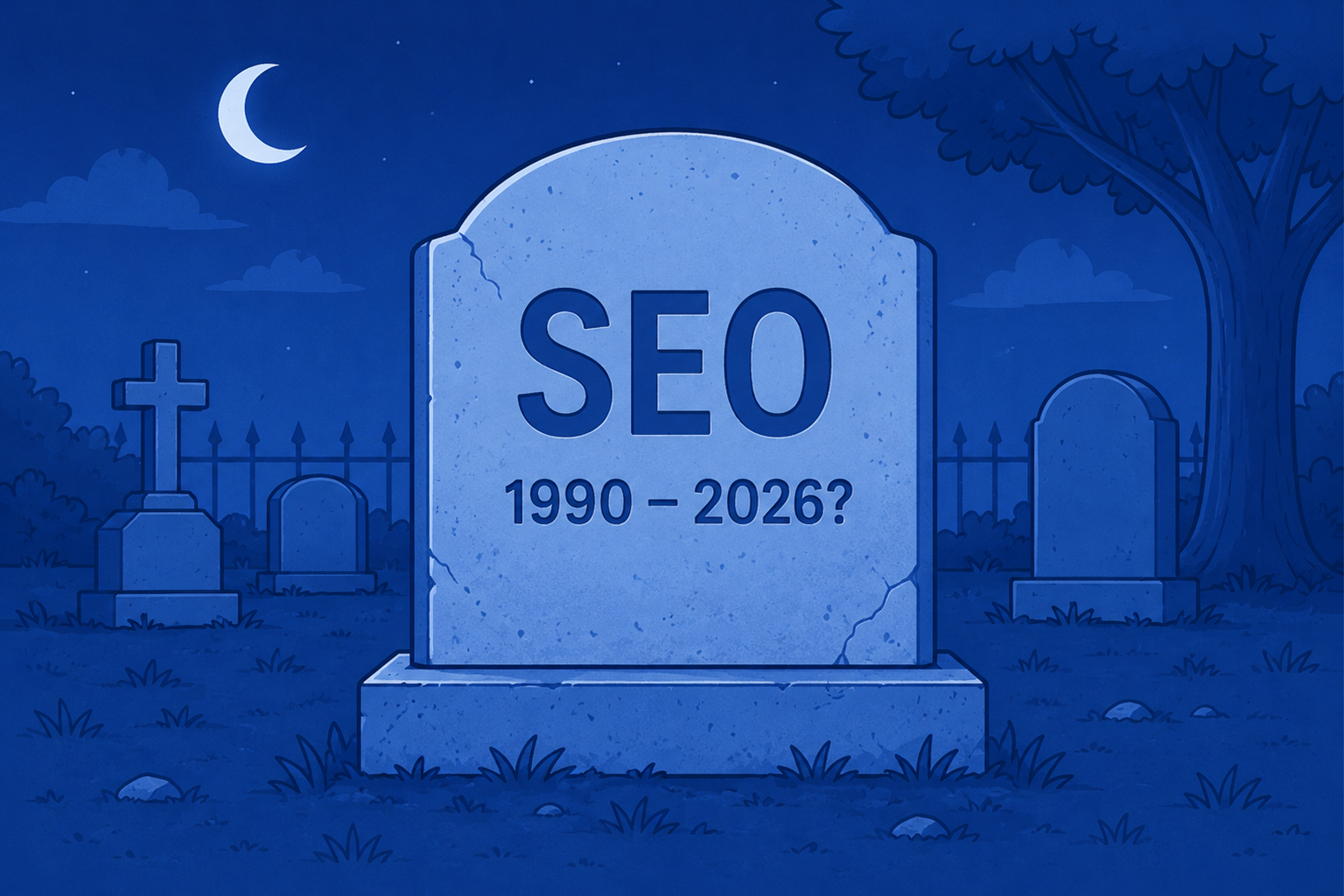
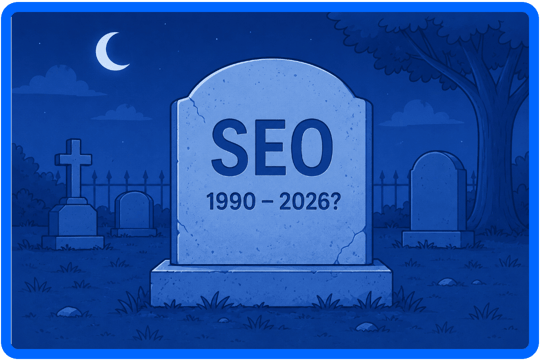
Is SEO Dead?
 Many terms have been created to describe how you can enhance your site's content so it's better understood by AI search tools.
From answer engine optimization (AEO) and generative engine optimization (GEO) to large language model optimization (LLMO) and more, these terms have been used to describe a set of believed best practices for increasing search presence. Tips like clustering topics, creating AI-readable content, including LLMs.txt files, and more.
But for the first time, Google has given some of its clearest guidance yet into search and how website owners should approach visibility in AI-powered search experiences. In the process, they have helped give insight into which of these tips are actually contributing and which ones might not be having an effect.
In their documentation, Google clearly states that "optimizing for generative AI search is optimizing for the search experience, and thus still SEO," meaning that no matter which acronym one uses to describe it, the process of optimizing for AI models falls under the all-encompassing umbrella of SEO.
As a result of this, all of the SEO practices that you have already been implementing into your digital presence over the years are still just as valuable to your discovery through AI as they were for traditional search. While you can still optimize your shop's website for AI discovery, any changes will also positively impact your traditional SEO, effectively treating both search methods as one and the same.
The Impacts For Auto Repair Shops
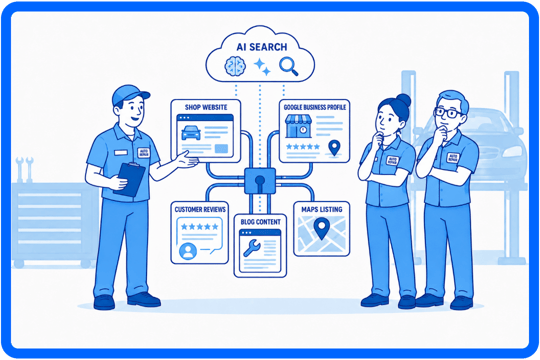 For auto repair shops, AI has not replaced any aspect of your website, nor is it requiring you to change it. Google's reiteration of SEO's importance shows that your website and digital presence need to remain a high-quality, practical source of information about your shop that is useful to customers. Content like service pages, accurate local business information, strong technical SEO, helpful blog content, and real customer feedback all contribute to showcasing your shop's expertise, who you are, what you service, and why customers trust you, no matter the method of discoverability.
Non-Commodity Content Drives Discovery
In order to be discovered by any of their search methods, whether traditional or AI, Google wants you to produce high-quality content that is helpful for the people who are looking for it. The inclusion of high-quality image and video assets also greatly helps raise your chances of being seen. But the most significant driver of your website's presence in AI search? Having valuable, non-commodity content.
Google considers "valuable, non-commodity content", meaning content that only you and your shop could produce, to be the greatest influencer for your website's AI search presence. Rather than recycling information that could easily be accessed through other means and without any form of opinion or insight, content that is uniquely influenced by you is more likely to stand out in search results when compared to other pages about the topic.
Your perspective is valuable to your audience, your discoverability, and to Google itself. Owning and operating an auto repair shop gives you authority on topics about automotive repair. Incorporating your own knowledge and experience into web content makes it more valuable than evergreen, commodity content that could be created and shared by anyone.
For example, factors like being in business for over 25 years or being one of the first shops in your area to service electric vehicles signal authority to both prospective customers and AI searching for your business. These personalized factors about your shop can also be applied to content to make it uniquely tailored to your shop and SEO strategy. Sharing your shop's process from diagnostic to completed repair, or the local driving conditions in your market that drive most repair jobs, are just two examples of useful information uniquely tailored to your shop.
AI has made the search for information even easier than it ever has been. But having your content seen over a competitor isn't your only goal anymore. Now you need your content to provide more value, more insight, and more perspective than theirs.
So What Doesn't Work?
Among the many different tips and tricks included under the GEO/AEO/LLMO umbrellas and recommended by various web service providers, there are very few that Google has confirmed actually affect how Google Search discovers web content. Here are just a few of these tips, what they've claimed to do, and why Google deems them unnecessary.
- Chunking content: The grouping of content into shorter segments, or "chunking," is claimed to help AI models scan and read your website's content more effectively. Having information broken down into smaller, more readable chunks would allegedly help AI systems determine which segments best answer user questions and make them easier to reference. Google dismisses this practice, claiming that their systems are sophisticated enough to understand and reference topics on a webpage, regardless of how crowded, short, or long the page is. Instead, Google recommends prioritizing human interaction on your site and writing content that makes sense for your target audience. For auto repair shops, this might be having short, descriptive paragraphs detailing the services you offer.
- AI-specific pages/rewritten content: One recommendation for AI discoverability was to create dedicated pages and versions of content optimized and accessible to AI. However, this creates the potential for confusion, with multiple pages about the same content or wording that may not seem natural to customers. Your customers want a smooth experience from your website, with content that's clearly laid out and easy to read. Google also clearly confirms that webpage content doesn't need to be specifically written for AI and that, again, the human experience and interaction should be your top priority.
- Artificial Endorsements: Both people and AI prefer to see a product or business endorsed by someone. It helps signal to them that it's a worthy place to put their trust and money. We've strongly emphasized the importance of auto repair shops capturing customer testimonials and encouraging customers to provide feedback through Google reviews. But some AI tools have sold hacks to these systems by generating AI-generated articles, reviews, and mentions in discussions, trying to act as replacements and increase rankings in Google searches. Google classifies this type of content as both spam and "inauthentic mentions." They stress that the process they use to rank in search prioritizes high-quality content and ignores spam, and that this extends to their AI search practices as well.
- LLMS.txt files and other structured data/markup files: One of the easiest and most common recommendations for AI discoverability is to include an LLMS.txt file on your website. These files are meant to act as a translation layer for AI to read and directly gain deeper insight into website content. But Google clearly states that these files are not necessary. Their search tools have the potential to crawl and index website files along with HTML files, but no file is treated any differently than any other, especially in regard to AI.
Takeaways, Our Perspective, and The Question That Remains
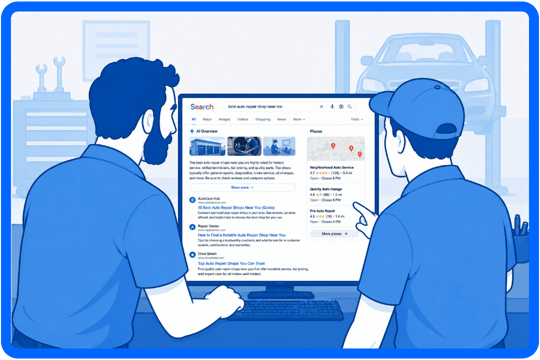 At AutoBoost, we have been slowly approaching these claims about the requirements for AI discoverability in our own processes and recommend that all shops do the same. Even with this insight from Google, we will still be watching to see how SEO adapts and changes alongside AI.
It is clear, however, that the SEO practices that we've been recommending and helping shops achieve, including local SEO, high-quality websites, accurate business information, and real reviews, remain the foundation for online discoverability. Even as the methods that consumers use to discover your shop have changed, the factors that make you trustworthy have not.
While it is reassuring to hear from Google that the tried-and-true SEO best practices still have the greatest impact on search, whether traditional or AI-driven, they are the only company in the space to provide such transparency. Whether these AI-specific search optimizations are also truly redundant for other forms of AI search, like ChatGPT, Claude, and CoPilot, remains a big question mark.
But auto repair shop owners can rest easy knowing that, for Google, which still holds an estimated 90% of search market share worldwide, the SEO practices you've invested in are still valid and will still have an impact on the way that the majority of people find your shop online.
About the Author